
The past week has been a new side of China, one that feels so distinct culturally from the southern regions I know.
It’s kind of funny to be in China in general during the fourth of July. As America turns 250, every left turn is a building from a thousand years ago. But especially in Shanxi Province, amidst traditions and temples and cities built over 1,500 years ago, I feel an especially sharp sense of historic smallness.
A wonder of historic Chinese architecture is the lack of nails. Intricate and delicate seeming temples are constructed only from carefully engineered pieces of wood that fit together just right — and remarkably lasts that way over a thousand years, through earthquakes and storms.
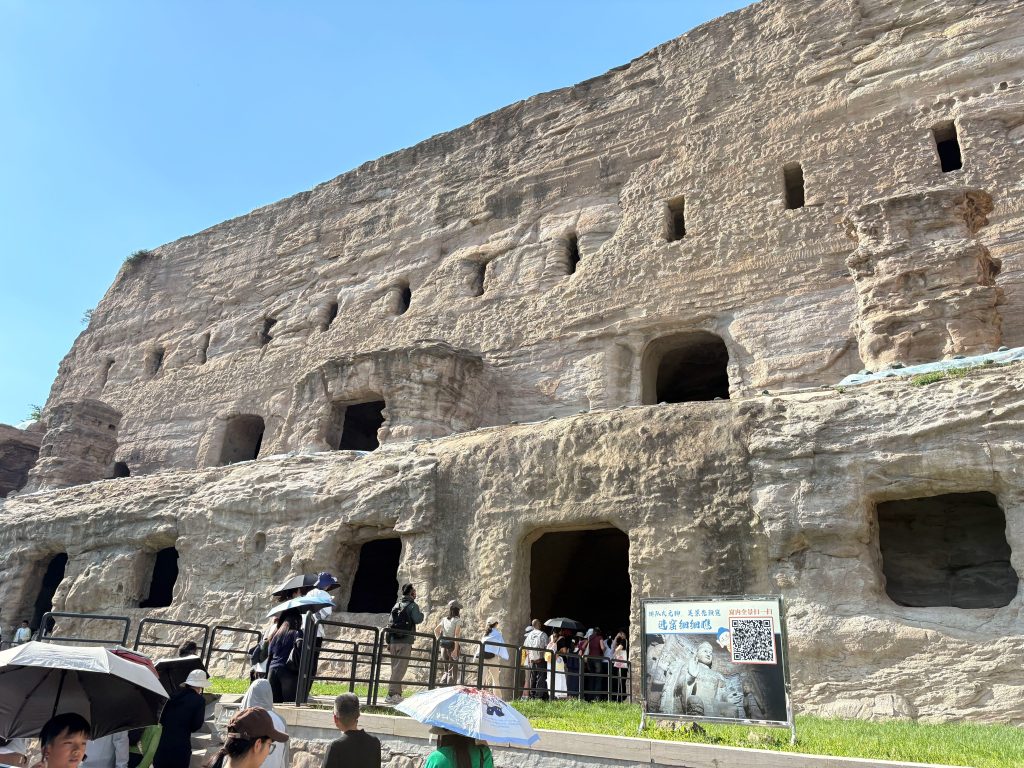
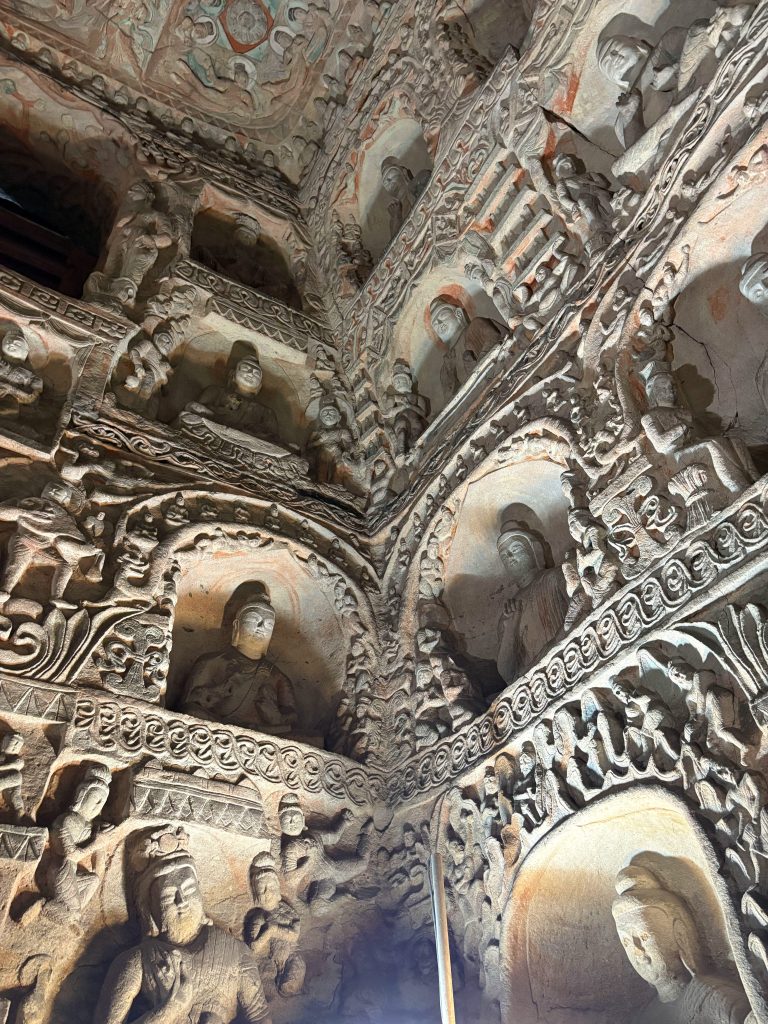
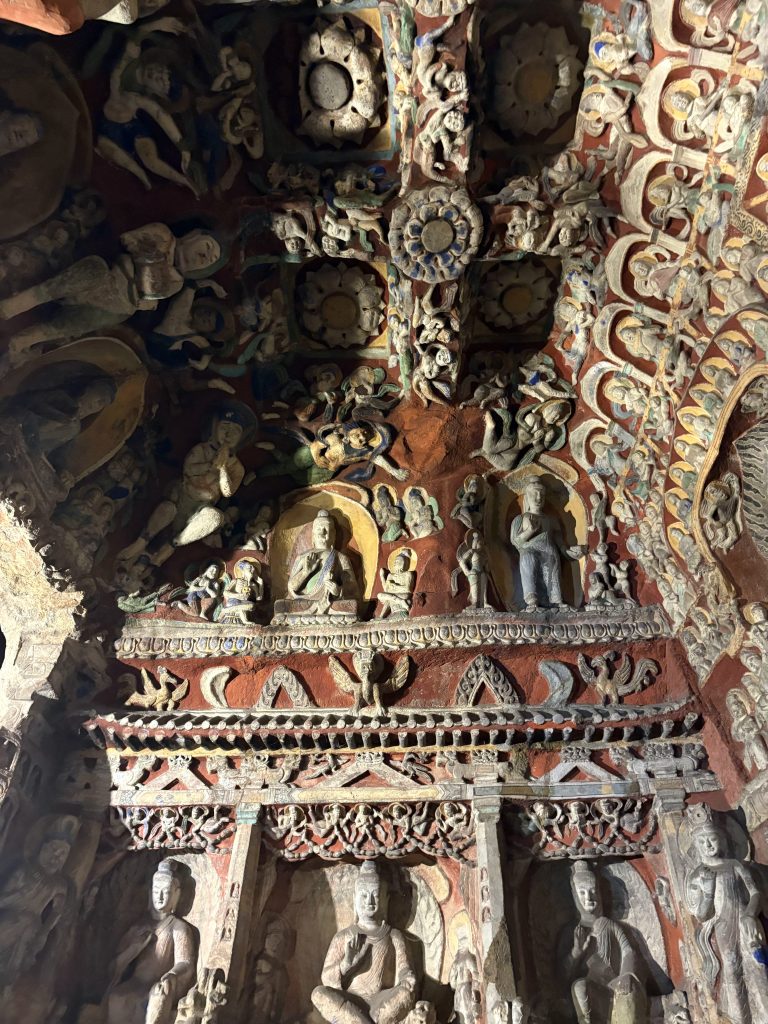
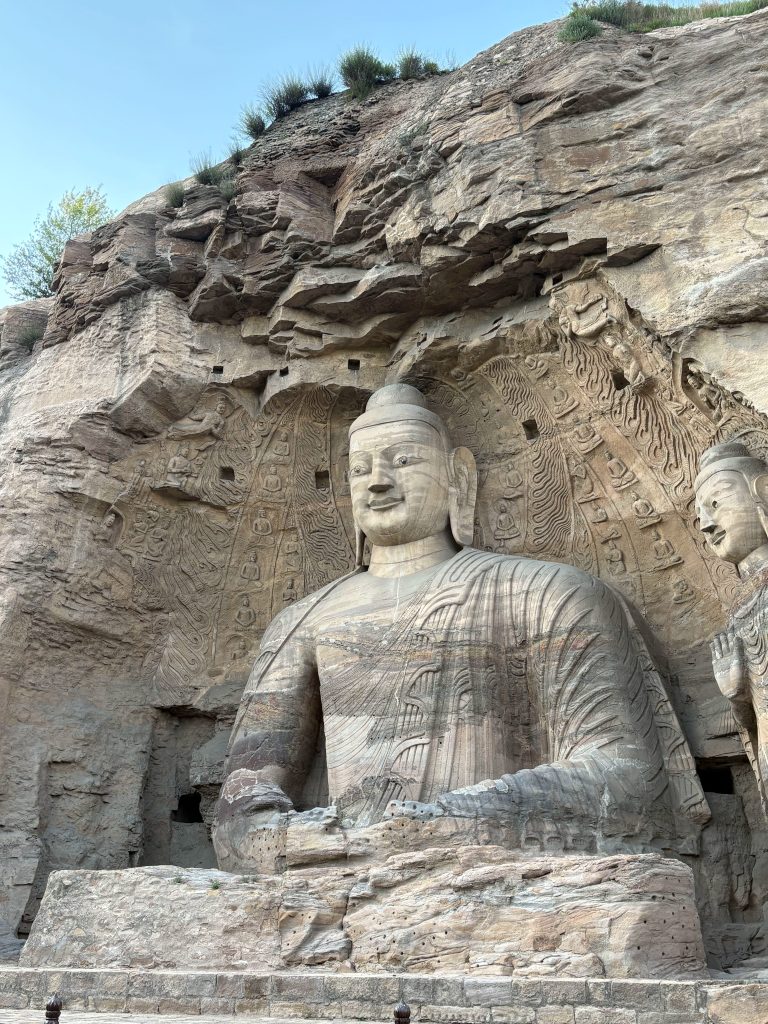
The Yungang Grottoes, skipping ahead a little to one of our later destiantions, represent an early multiculturalism that I felt still reflected in modern ways in Datong today. As Yungang was along the start of the Silk Road (particularly of interest to me as I soon travel west along the Silk Road), traders from across Eurasia came to worship the hundreds of Buddhas of Indian and Tibetan origins carved in great detail painstakingly into the caves. There were Greek-inspired columns, the ceilings adorned like carved al fresco. The changes in art style over time across dynasties was an amazing transition to see, walking from the first cave from the Northern Wei to the tenth, entering the Qing Dynasty.
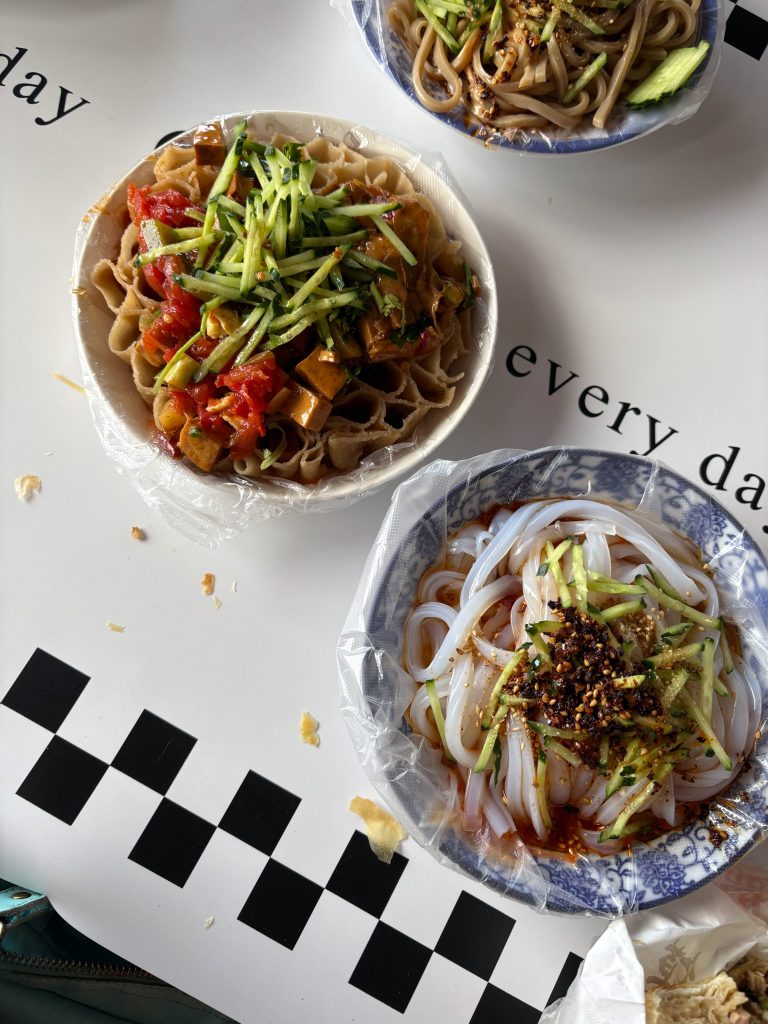
Shanxi cuisine seems relatively post-Columbian compared to other Chinese cuisines I’ve tried. Obviously, there’s a huge emphasis on wheat — you’d be hard-pressed to find rice on most menus — and amongst the hundreds of noodle types, some are quite international. Ke lao lao, for example, is a dish with vertical tubular noodles resembling rigatoni steamed together, filled with a tomato-based sauce. Another dish is made by grating a ball of dough into little spaetzle-like noodles. Many noodle dishes in general feature tomato-based sauces. But it isn’t just the noodles. One taxi driver introduced us to a restaurant in Pingyao that served only potato dishes, but cooked in more than 80 ways. Other dishes prominently use corn. Some noodles, liang fen, are made from potato or corn starches.
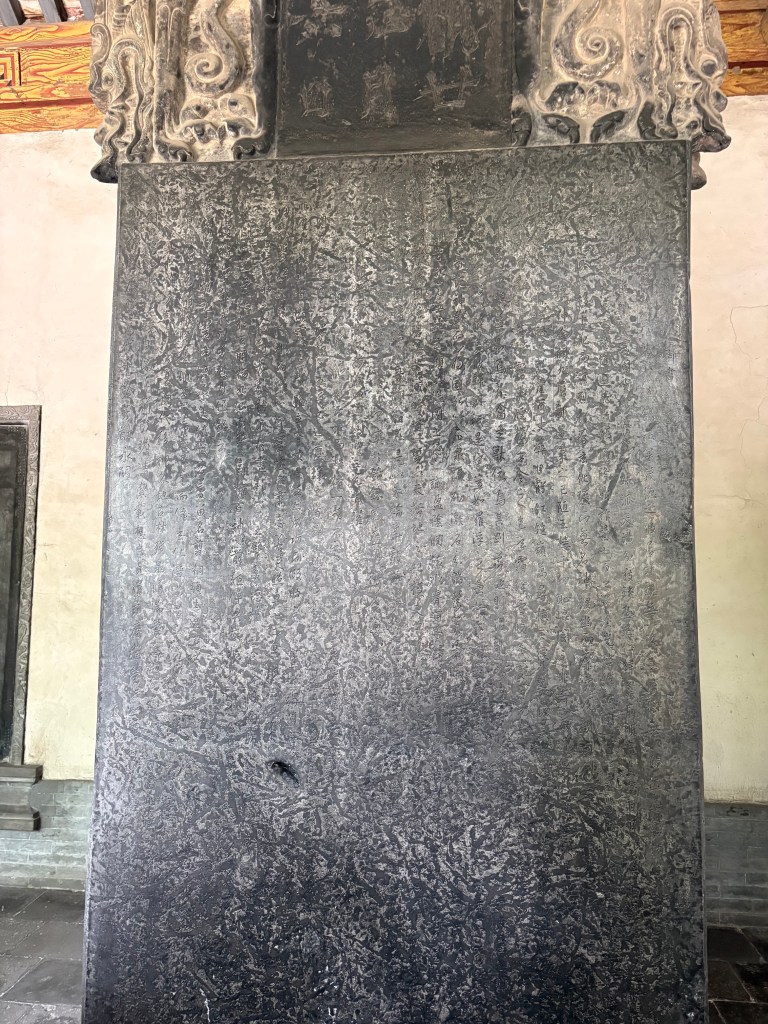
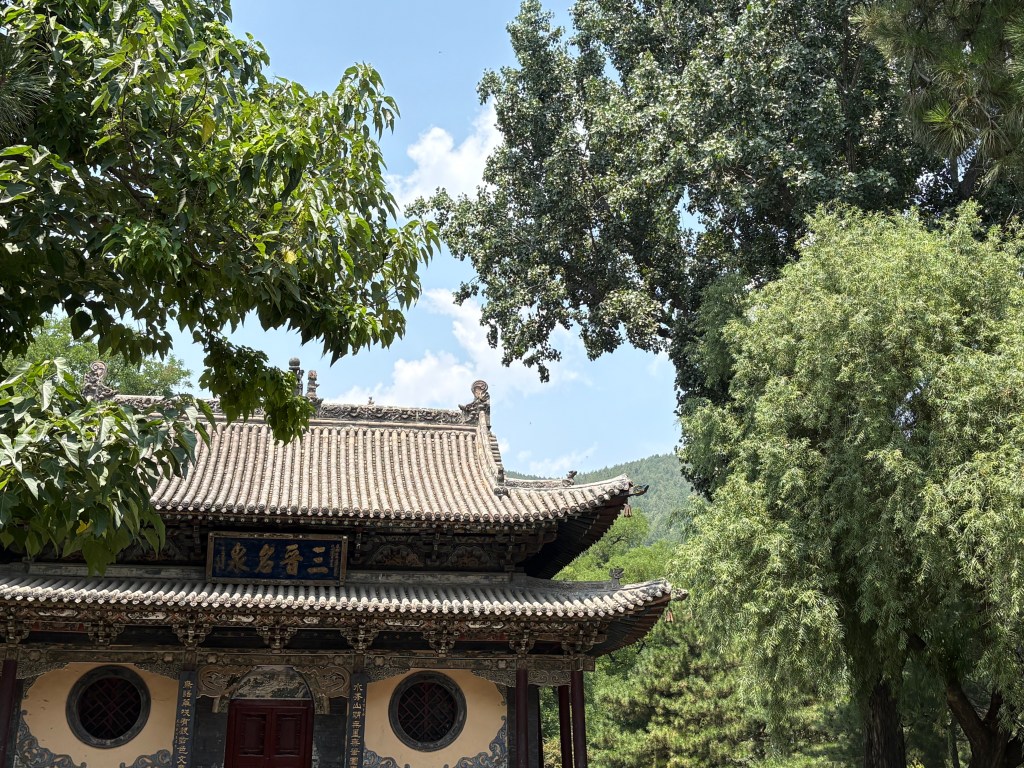
Another pretty cool place we visited was the Jinci temple area, which had historic temples from more than a thousand years of Chinese dynasties. We saw a stone tablet that was carved by the emperor Tang Taizhong himself, after returning from Korea. When I was in sixth grade, I had made a video about his life and influence, so it was retty crazy to see a place he had frequented around 1,400 years ago.
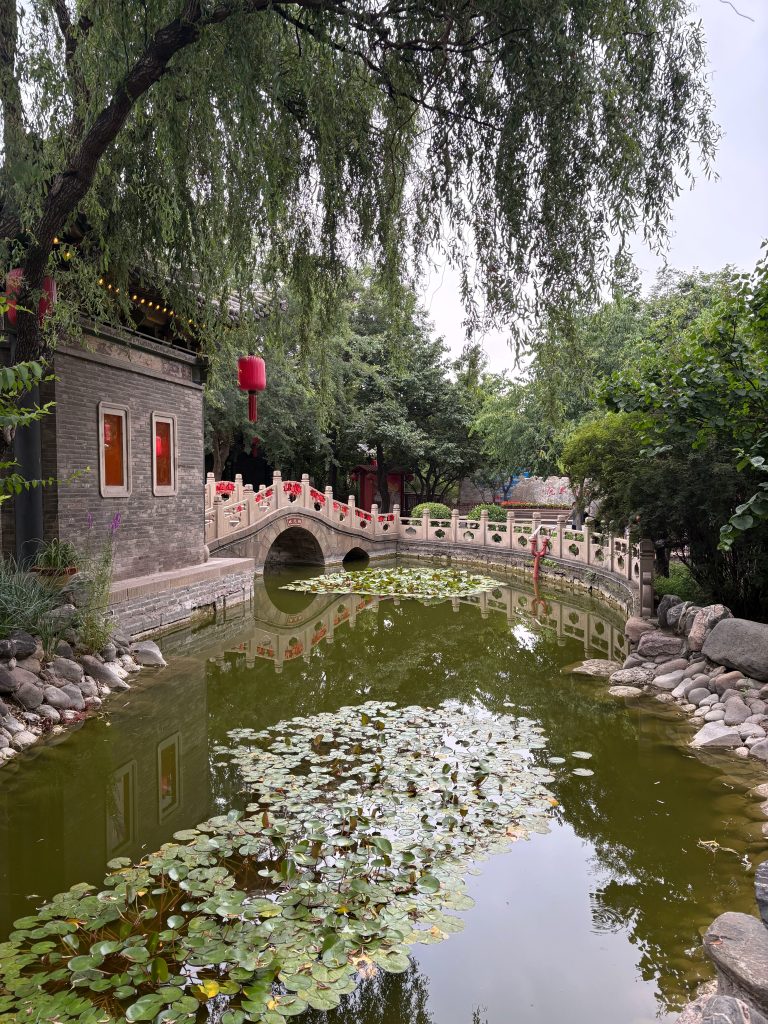
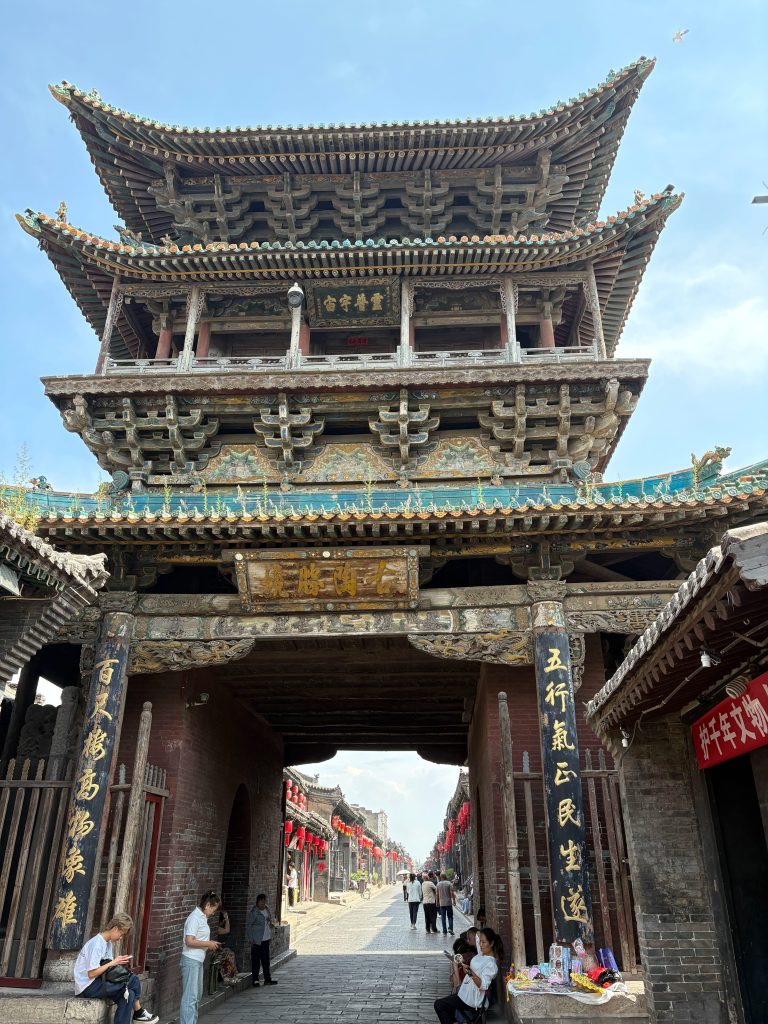
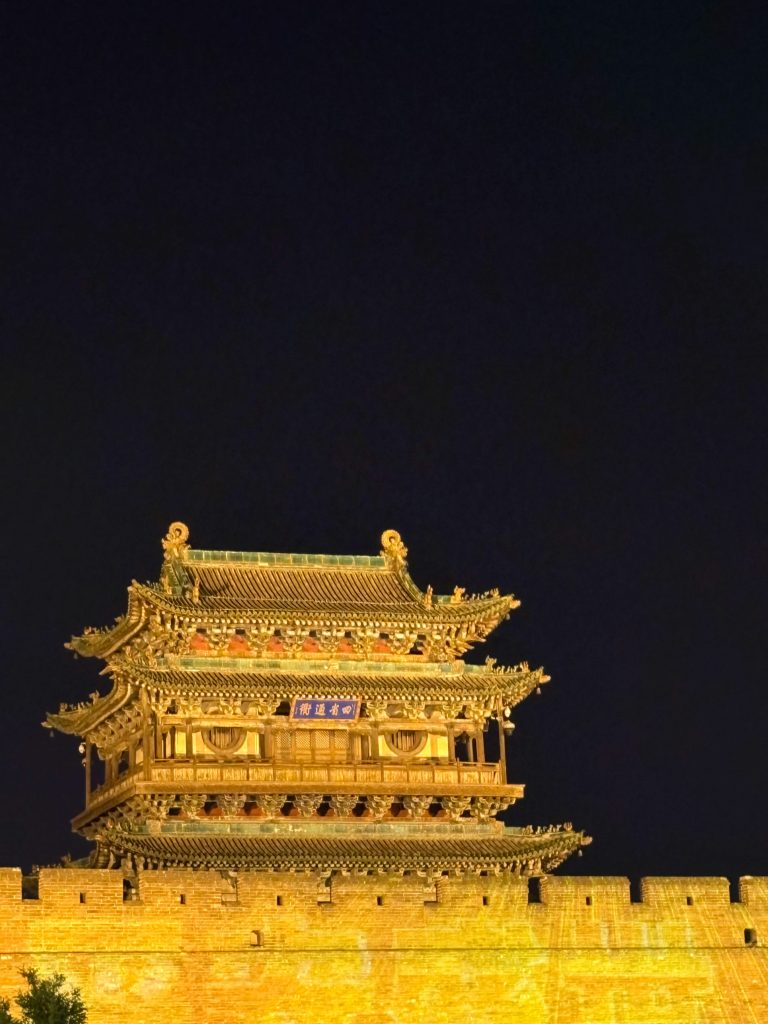
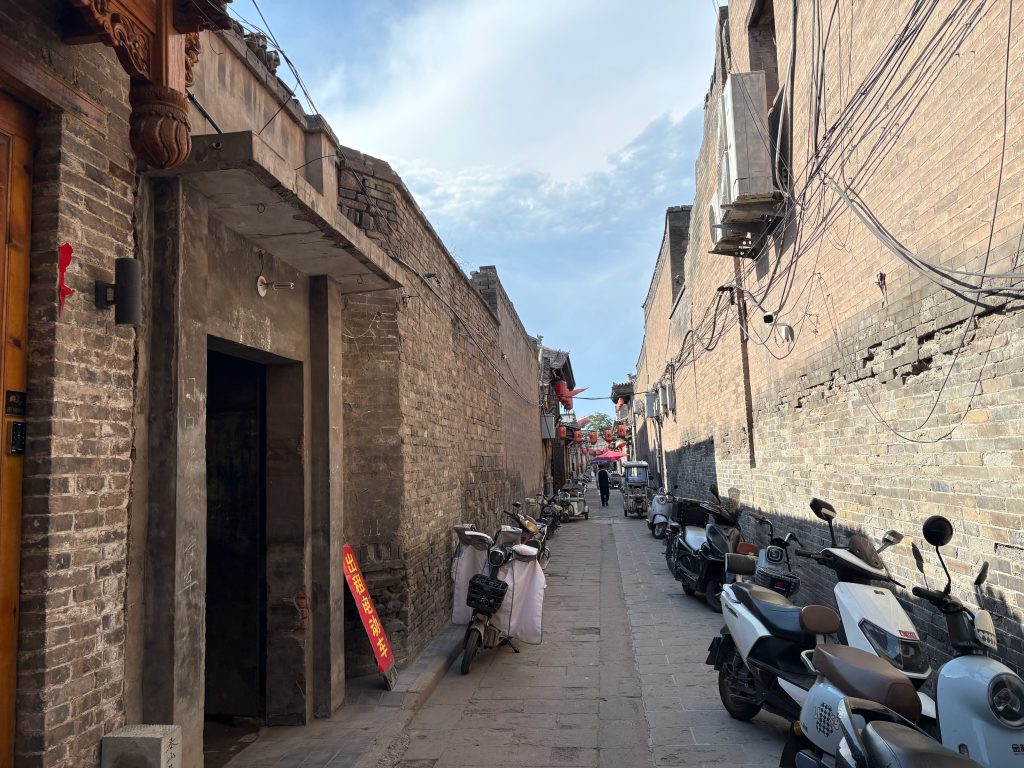
Living in the ancient city in Pingyao was pretty cool, though you definitely need to be careful walking around courtyards with steps and door sills (门槛) everywhere. The stone walls of the walls build out a maze like network of streets and alleyways. Some main streets, like the Main South Street, are filled with streetside shops and vendors — surprisingly not upcharged at all. A bowl of knife cut noodles cost around 8 RMB, a bit over $1. Our tour guide told us the prices are pretty strictly regulated, as to not blow up prices and make the city less attractive for tourists. They also had a pretty good nightly light show projected onto the ancient city wall border at the Southeast Gate, that told some story about Japanese invasions and included an EDM light show in the middle that was essentially a rave.
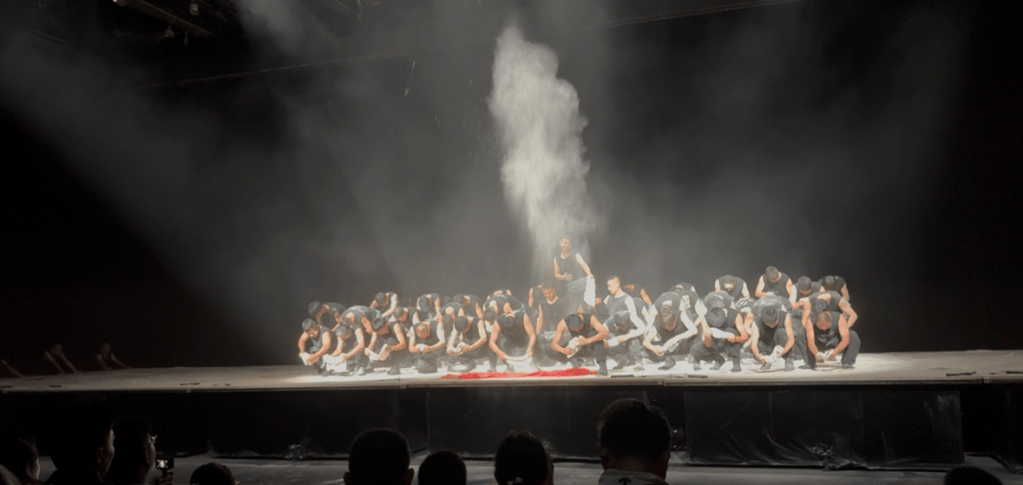
The first night, we attended an interactive play that told a moving true story about loyalty and Pingyao pride: A local troop of a hundred bodyguards travelled to Russia to rescue a local 7-year old who had been kidnapped with hs family, and all perished on the treacherous desert rote back but the boy survived, to eventually have generations with tremendous Pingyao pride even after dispersing to other parts of China. From the past, an entire troop sacrificing themselves to protect one of the city’s own, to the current, where members of the family return to Pingyao each year with traditions showcased the deep ties of people from the ancient city.
We walked through the first bank of China, examining the first anti-counterfeiting technologies in the check manufacturing and going down into the gold valults. In the entire history of the bank, they never reported a single counterfeit incident. Each month, codes switched with characters encrypting the numbers on checks so that only bank tellers could determine the identification numbers. Long distance checks carried detailed descriptions of the person meant to cash it out (e.g., the person is 173 cm tall, thin frame, upturned and narrow eyes, with a birthmark on their left cheek, etc etc).
And, I did a traditional Chinese photoshoot! I dressed up as a daughter in ancient times. This was definitely an intriguing experience, the makeup first of all making me paler than I’ve ever seen myself, and their editing services offer “beautifying” 美颜 features like making your skin smoother or even your face slimmer. Such different beauty standards than in the US, for sure. The cameraman was quite experienced, directing variious poses around Chinese propos like a guzheng, bird cage, caligraphy book, etc. I enjoyed the experience overall but realy not sure what I’d do with these pictures.
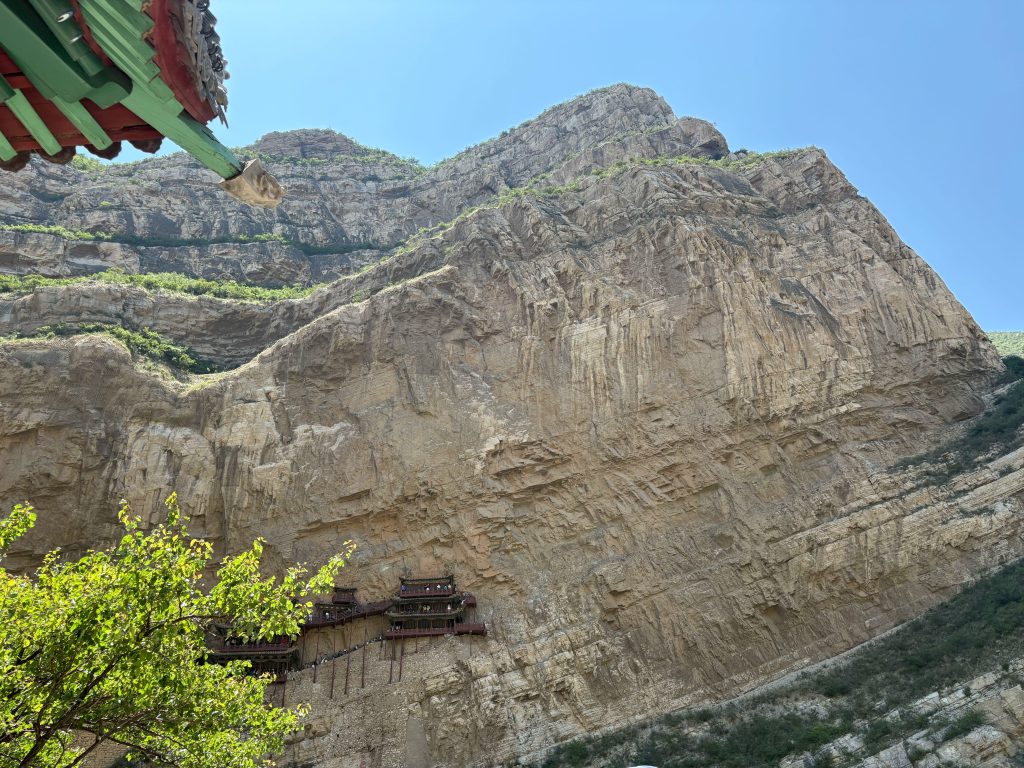
Last leg was in Datong, where we saw the aforementioned Yungang Grottoes, and the famous Xuankong Hanging Temple, an architectural and cultural wonder. More than 1,500 years ago, it was built with wooden crossbeams embedded deep into the side of the mountain cliff overlooking the river, as a combined temple for Buddhism, Taoism, and Confucianism.
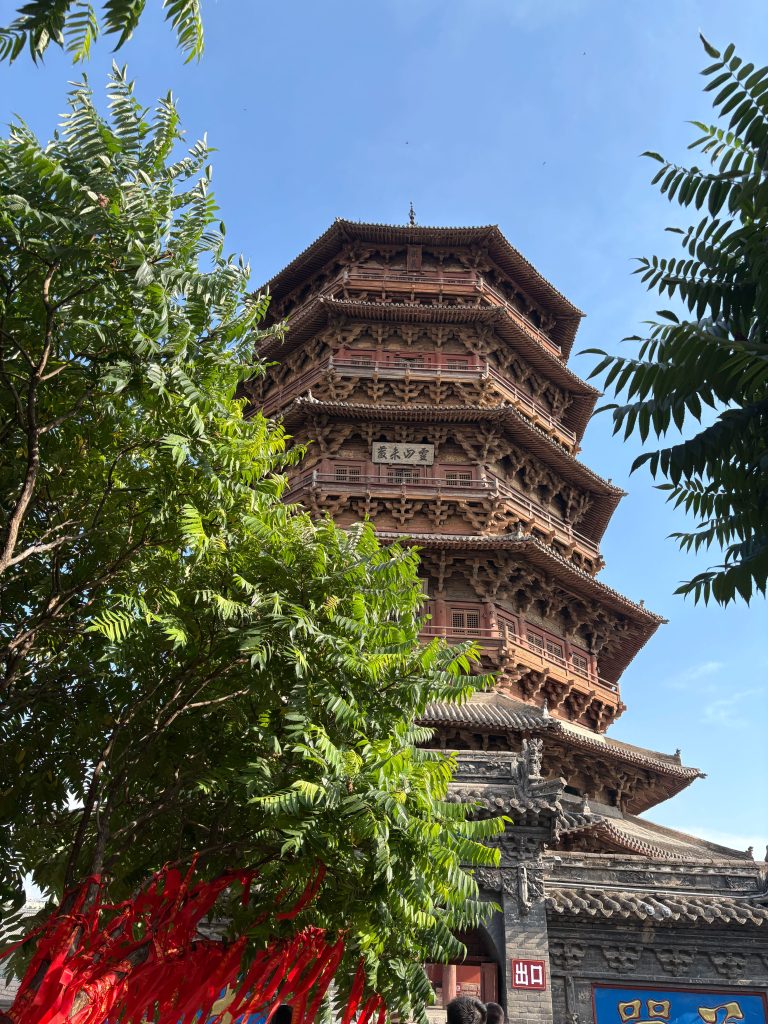
There was also the Yingxian Wooden Pagoda, the tallest and oldest in the world. Leaning slightly like the Tower of Pisa, it was constrcted almost 1,000 years ago only with interlocking wooden beams.
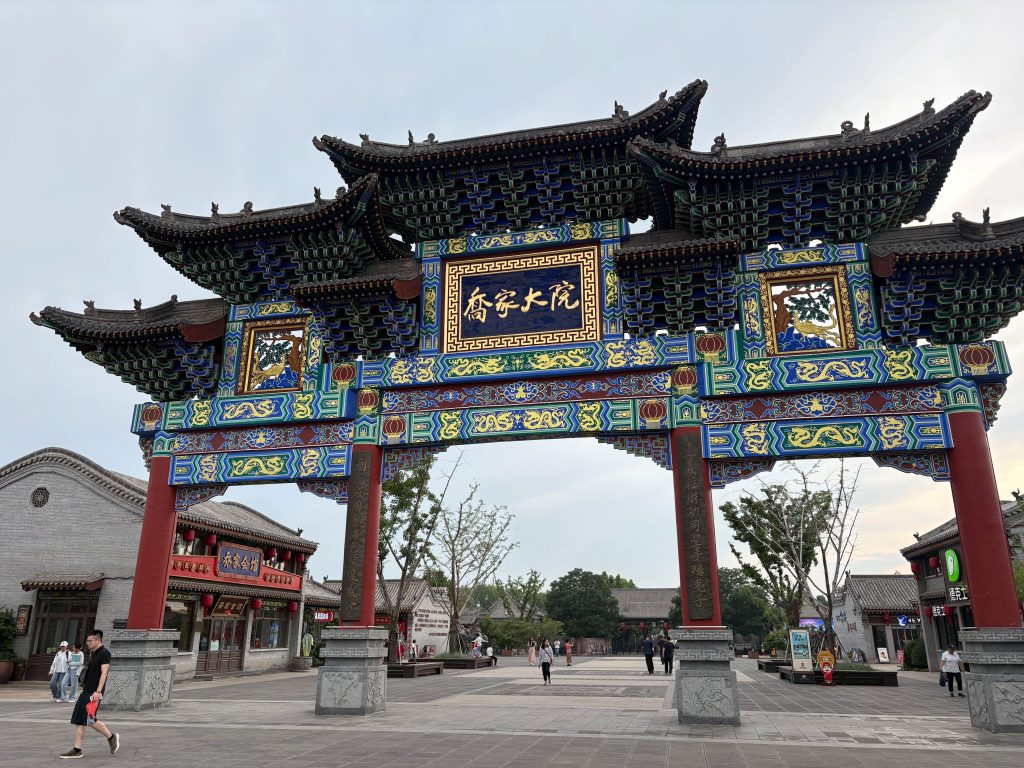
Honorable mention sites I won’t go in depth in: Qiao Family Courtyard (in Taiyuan, a Qing-era billionaire family’s city of their own, essentially) and the Nine Dragons Screen (largest of the three in China).
Seeing the past thousand years of civilization throughout the province gave a great deal of thought to the idea of sustainability. How a society could evolve through political periods and cultural changes, technological advancements and geographic growth but still remain intact and adapting so many centuries later, is truly incredible. There is a lot of built development in Chinese cities, sure, but somehow over so many years and so much population there is also a lot of the environment intact. The fact of China’s longevity tremendously contextualizes its clean energy dominance as well. While I still saw coal plants in Yiyang and throughout Shanxi, I saw so much more solar panels on farmland and wind turbines on hillsides. Though perhaps cold transitions for older industries, practical decision-making prioritizes societal efficiency overall and as the LCOE shifted, so did governmental energy investments.
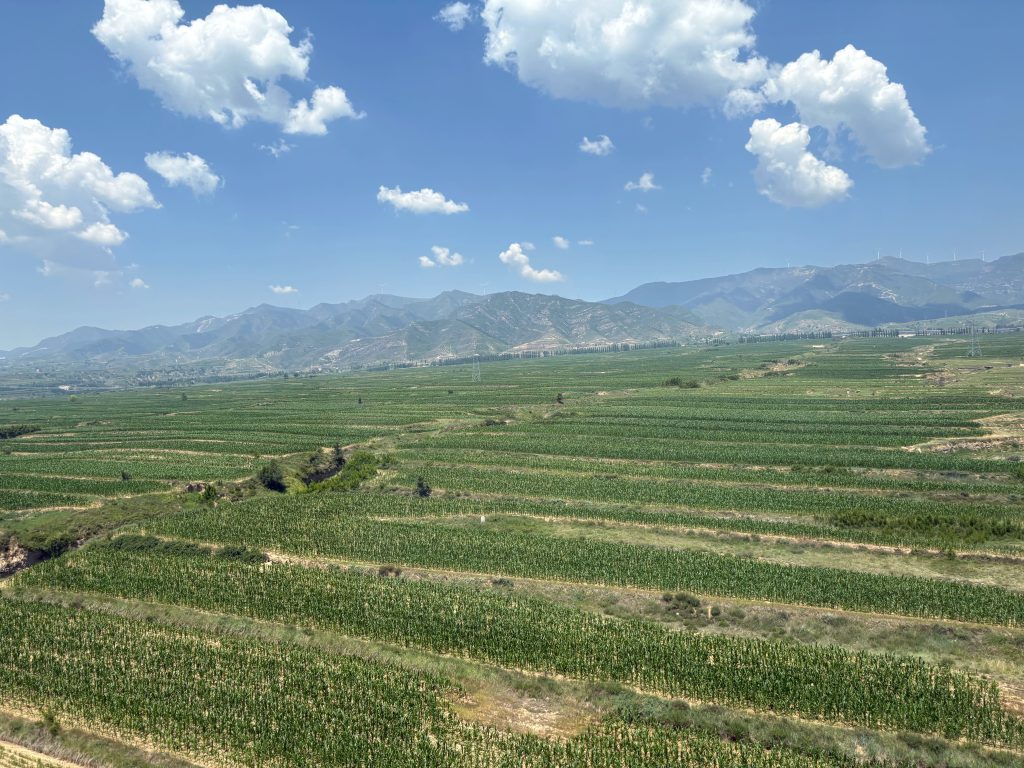
Cutting this short, as my train approaches Beijing now. I love writing on trains, but especially the smooth environment and beautiful views of the Chinese high-speed rail. Quite a top-tier work spot.


Leave a comment