
In the past two days, I flew from Tokyo to Hong Kong, where we crossed over to China in Shenzhen via taxi, then took a train to Changsha, then another to my parents’ hometown of Yiyang, and then visited my grandfather’s tomb in Ningziang. With the whirlwind of planes and trains, from hypermodern metropolis to rural mountain village, have come a whirlwind of emotions.
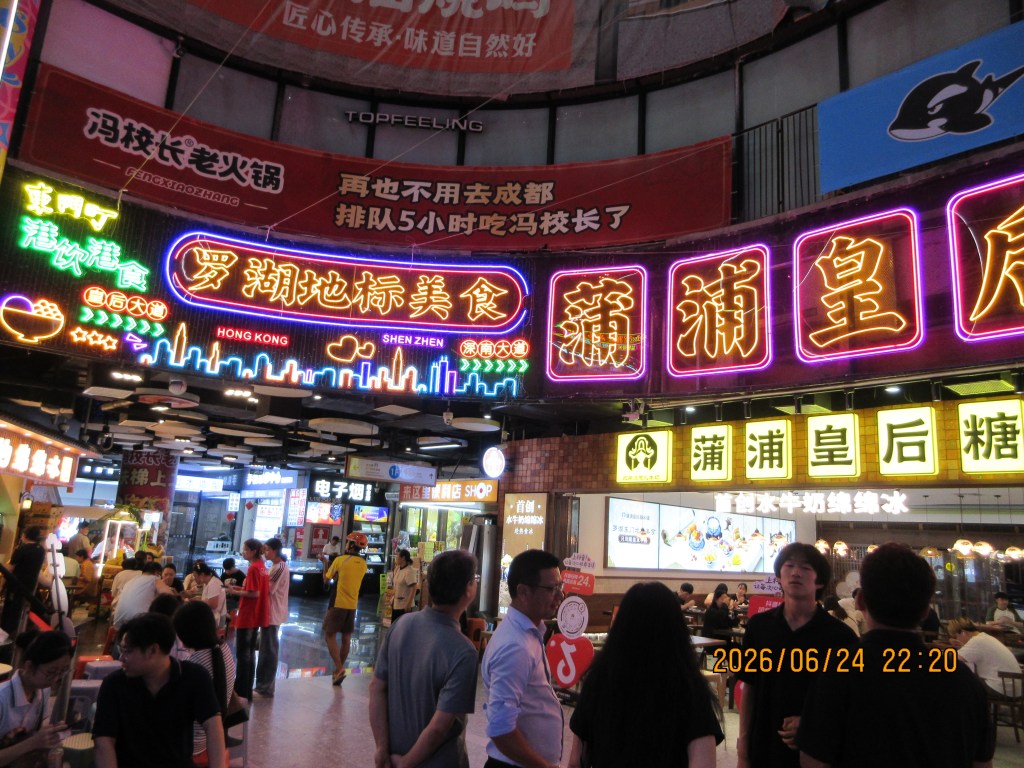
Going to China has always been a bewildering blend of simultaneous nostalgia, bittersweetness, and deep reflection on my American life. A few weeks every few years where I slip into nearly an otherworldly trance, so far removed from what I have built my own life on. It’s hard to describe to those who haven’t lived it, in many ways. Some parts of thetrip aren’t glamorous, some parts are just too foreign to the American mind. So I usually swalloow all the conflicting emotions, and boil them down into a nothingness of “good” when ever asked about these visits. But this time, I’m so glad that I have this place to pour out my reflections, because there are many, years’ worth.
First impressions back: Trains and bathrooms
Even after a dozen trips into China, there’s always a culture shock coming back, . And there is so much more culture shock coming from Japan, the most law-abiding, quiet, and polite society where no one would dare jaywalk, to China than in previous visits coming from the US.
Immediately, the air is muggy, able to hold the density of smells and sounds of traffic and people alike. The restaurants’ halls of rooms with large round tables too hold lingering cigarette smoke that beckons in a Pavlovian way, the anticipation of a fruit platter neatly presented ready with toothpicks. The other first sights — transit, bathrooms, clothes — contribute to the starkness of the juxtaposition.
Transit in Japan is orderly and quiet, where it’s impolite to eat in public at all. On China’s bullet train, vendors brandish food items through the car and the messaging only tells you not to eat overly smelly foods. In fact — the announcements pronounce almost comically: “Please don’t eat strong-smelling foods, but more so, please do not take off your shoes,” as well as a friendly reminder “when you drink hot water, please be careful not to spill it over other passengers around you.”
Where Japanese society closely adheres to neutral tones, similarly cut silhouettes and office wear, Chinese people wear literally anything (e.g., Beijing bikini).
And of course, the bathrooms. In all the ways China’s rapidly advanced in the past decade, bathrooms have been woefully under-improved at that rate. From the heated bidets in Japan’s public bathrooms to the squatting holes everywhere, it’s always a humbling experience using toilets in China. Brings you down to earth, for sure.
But all this comes at the difference in perceptible energy and life, a culture in China where the streets are loud and rambunctious into the night with people of all ages strolling about, chatting loudly and shouting over beers. It’s rambunctious and rowdy, but unabashedly so.
Hunan: Playing cards and firecrackers
A brief rundown of my family’s origins: both my parents’ sides come from similar rural regions in Hunan Province, with my grandparents having all moved to the same apartment complex in the same town of Yiyang later to teach at the same school. Visiting family thus means visiting Yiyang, as well as the rural outskirts where my parents really grew up.
Coming back to Yiyang is such a bittersweet voyage. It is a venture into the heart of China where no foreigners would visit (there is not much economic activity or tourism in this city). It’s a voyage solely with the purpose of seeing family, which in itself feels much harder than the international flights and trains and taxis to get there.
It’s so hard mainly because the family we most want to see, my grandparents, seem to age exponentially each passing visit, in addition to other obstacles of language, infrequency of communication, etc Sure, I get older each time too, from preschool one visit to elementary school in the next and just a few more times before I’m graduated from college. But my grandparents’ health seems to deteriorate before our eyes, these brief visits like grasping onto life rafts already floating too far away. The time I really ever had to spend with them was in the past. The pandemic era of travel was particularly robbing, six years where so much changed in between and no way to say goodbye.
Dementia is truly a most painful human experience for a family to experience, the slowness of the descent and every interaction with its efects. For a mother to not recognize her son. I suppose feeling the pain like this is like a graduated version of loss. But at least deterioration in this condition means that Nai Nai is happy and otherwise in good health. And amazingly, one of the few muscle memories she retains is playing cards. Even in her advanced memory loss, playing cards with people still brings her great joy.
Which leads the sweetness of Yiyang. Life is otherwise simple and relaxed, with the constant care a Chinese guest receives.
Part of it lies in the incredible power of cards, a uniting force across time and international divides. When I otherwise have little in common to discuss with my relatives, given my relatively limited conversational range in Chinese, poker (of the “guan dan” variety) keeps us deeply engaged for hours. Hours spent together with little real-life stressors or phones, just the mini ups and downs of the game.
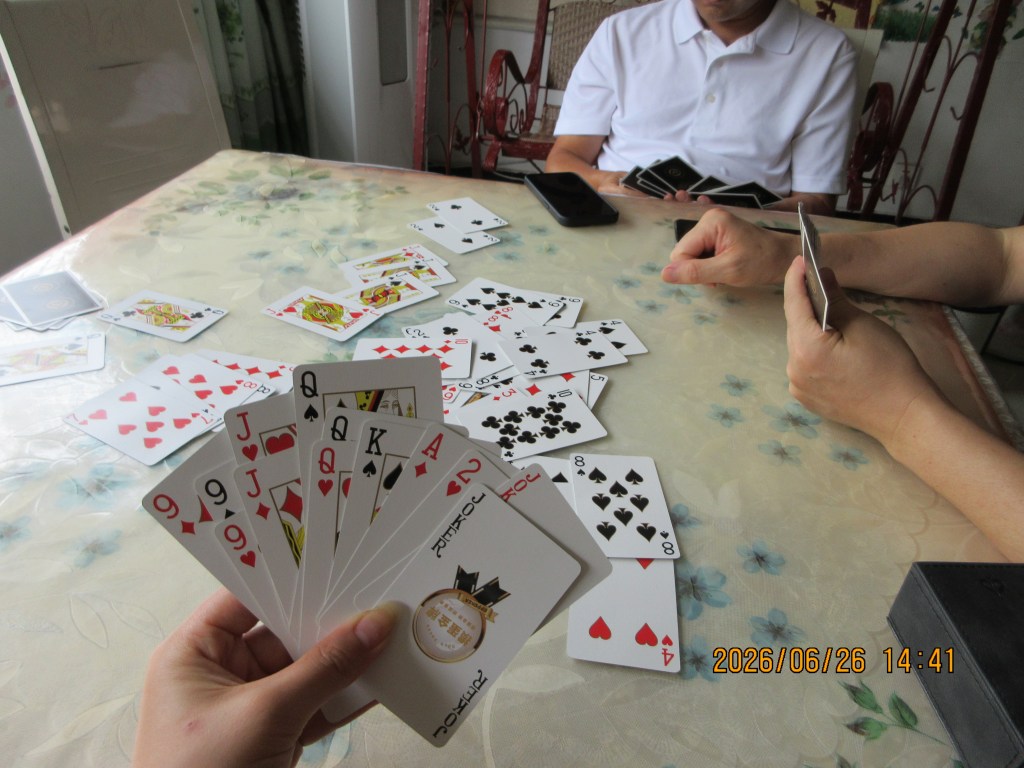
Particularly, my uncle is very good at poker. Apparently, his work in Guangzhou is mainly occupied by company-wide guan dan tournaments. But this game has brought us together significantly, as well as my cousin’s husband (second cousin?), a cool guy who used to be in the Chinese army but later works in social services for mental health and homelessness in Guangzhou. Despite never having left the country, he knew a lot about the world, from Waymo and Tesla technologies to the Charlotte Hornets and Carolina Panthers.
Government employees like him aren’t allowed to leave the country at all. Same with my dad’s college friend who’s a lawyer in Shenzhen. This fact has made me so much more grateful for my position in life, to not just travel for work but at will for fun, internationally to essentially anywhere I wish. So much opportunity, so much freedom, how lucky I am.
Visiting my other relatives is each a distinct experience. My other grandmother, spry and energetic, presents us with odd bits and bobs she eagerly buys on the internet and out in the town. Croc dupes, dried fruit leathers, pebbles of jade, even bird saliva. My mom’s little sister, my aunt, is an interesting character who somewhat epitomizes the sleep economy of Yiyang, and a very different life than the one my mom chose instead.
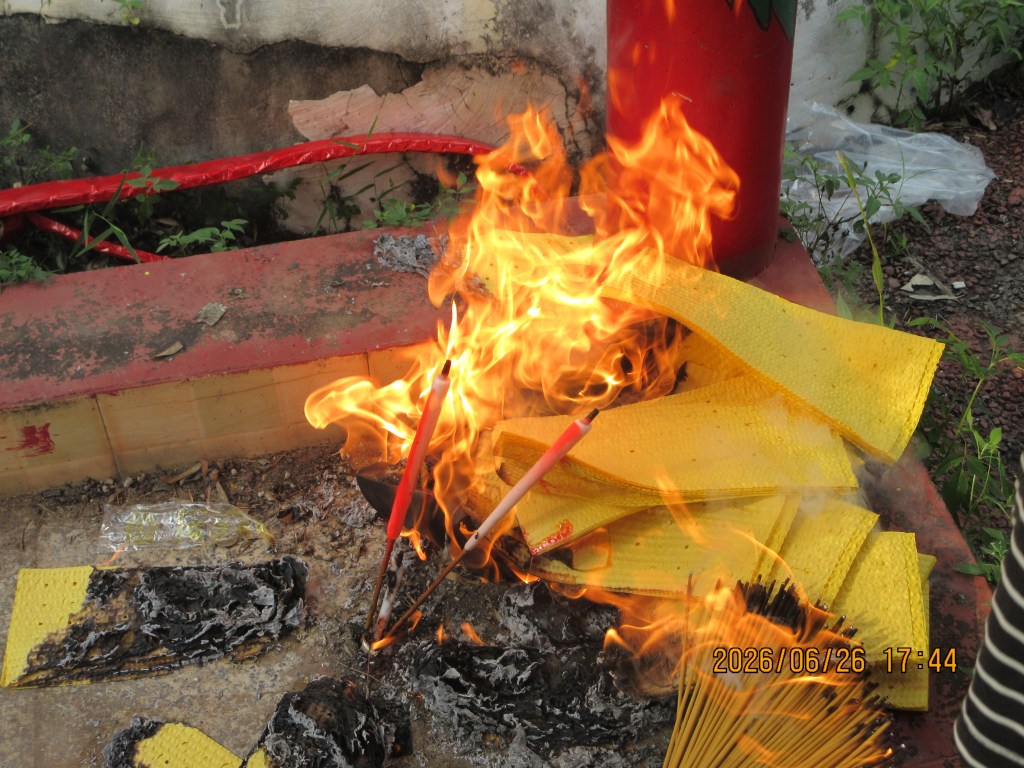
Today we visited my grandfather’s grave site in the place he grew up, a mountain village called Ningxiang. It was beautiful, lush green hills with clear ponds and rice paddies, simple rectangular homes built on the foothills. We met my dad’s cousins, who had prepared for us a generous array of melons and longans, and walked up the mountain through some brush up to his tomb to set off freworks and frecrackers and honoring our grandfather’s life.

Well, realizing as I type this in the Yiyang hotel room that this has become quite long. I have more to say about my observations of China’s development — the cars and technology and social programs, but I’ll leave that to the next post.
 cqchen life
Leave a comment